Menu
Menu
Menu
Menu
Anchorage is a unique commercial real estate market—one that rewards investors who understand its fundamentals and that is does not behave the same as the Lower 48.
This guide is intended for buyers and investors evaluating opportunities in Anchorage commercial real estate, with a focus on long-term fundamentals, pricing dynamics, and what actually drives value in this market.
Anchorage functions as Alaska’s economic and logistical hub, supporting a diverse mix of industries that provide stability uncommon in many small-to-midsize markets.
The Anchorage population skews more highly educated, younger, and with a higher median income when compared with the United States population at large. Anchorage is home to ⅓ of the entire population of Alaska, and provides more than 50% of all employment within the state.
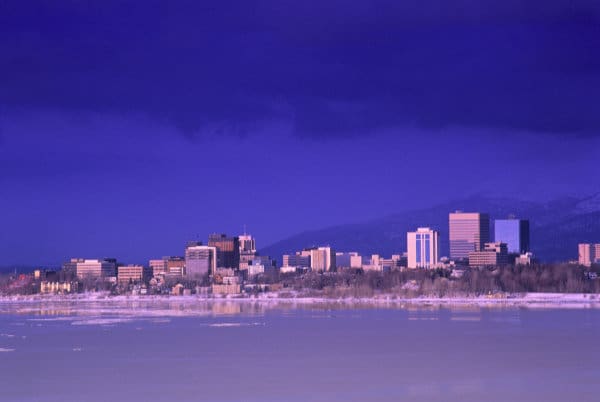
Anchorage’s airport plays an outsized role in the local economy. As the world’s third busiest cargo airports, it positions the city as a critical link between North America, Asia, and Europe. This has long supported demand for industrial, warehouse, and distribution space—particularly properties with good access to transportation corridors.
The presence of multiple military installations and a strong federal footprint provides a stabilizing influence on employment and spending. This tends to smooth economic cycles compared to markets that rely heavily on a single private-sector industry.
Anchorage benefits from a mix of:
This diversity helps insulate the market from sharp swings and supports consistent demand across multiple commercial asset classes.
Anchorage has the feel of a small town when it comes to relationships and deal flow—but the infrastructure, scale, and economic importance of a much larger city. For investors, this creates opportunities where local knowledge and relationships materially impact outcomes.
Cap rates in Anchorage vary by asset type, location, tenant quality, and lease structure, but often hover around the 8% range, sometimes higher depending on risk profile.
What makes Anchorage especially compelling for investors is the combination of:
In many markets, high cap rates signal distress or oversupply. In Anchorage, they are more often the result of:
For disciplined investors, this can translate into strong risk-adjusted returns—particularly when properties are acquired with realistic underwriting and a clear understanding of local conditions.
One of the defining characteristics of Anchorage commercial real estate is limited supply, especially for quality industrial and well-located investment assets.
New development is constrained by:
As a result, existing properties—especially those with functional layouts and long-term tenant viability—tend to hold value well and attract strong interest when they come to market.
For investors, this often means:
Anchorage is not a market where generic underwriting works.
Key considerations include:
Investors who succeed here typically take a long-term view, focus on fundamentals, and work with advisors who understand both the numbers and the local dynamics.
Pricing in Anchorage is highly asset-specific. Two properties with similar square footage can trade very differently based on:
This makes local market knowledge critical when evaluating opportunities or assessing value.
I advise buyers and investors on acquisition strategy, pricing, and execution in Anchorage commercial real estate, with a focus on industrial, land, and investment assets.
If you’re evaluating a potential acquisition or want a high-level, non-reliance review of a property’s positioning in today’s market, you can request a preliminary conversation below.
Formal Opinions of Value and detailed underwriting are available by engagement.

3801 Centerpoint Drive Suite 101
Anchorage AK, 99503
ericsobolik@gmail.com
C: 907.231.2270
O: 907.563.5500
Designed by Alaska Search Marketing, LLC.